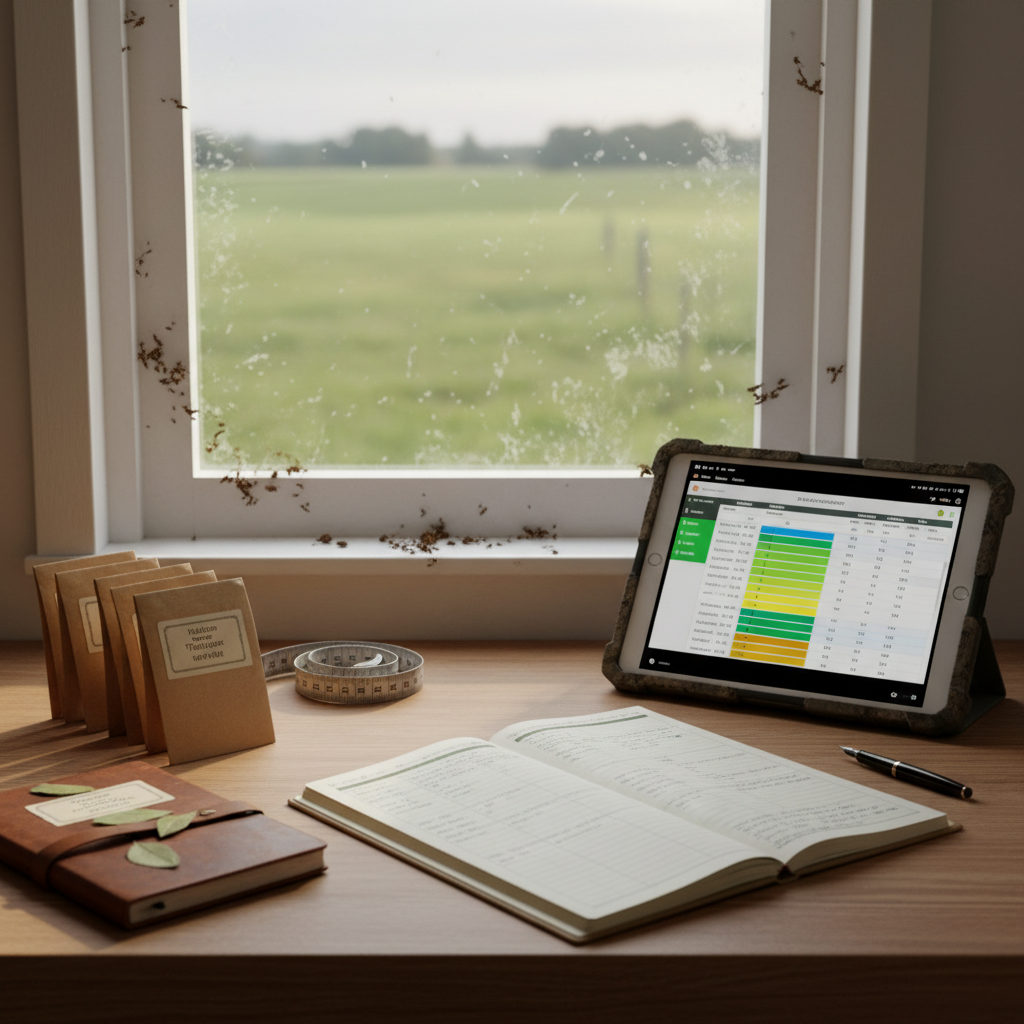
An organized wooden farmhouse desk positioned beside a small window overlooking a distant pasture, the glass lightly speckled with dust and soil. On the desk, an open planner filled with neatly written crop rotation notes sits beside a rugged, mud-splattered tablet case displaying a color-coded farm management dashboard. Stacks of labeled seed packets, a coiled measuring tape, and a weather-beaten field notebook complete the scene. Soft morning light filters in from the side, casting gentle highlights on the paper edges and subtle shadows from the pen and tablet. The atmosphere is focused and professional, suggesting careful planning under pressure. Captured at eye level with moderate depth of field and clean, balanced framing, the photographic realism underscores the intersection of agricultural science and everyday management challenges.

Our Field Journey

This page highlights how our family-run farm informs practical agribusiness lessons, community outreach, and hands-on guidance for growers, students, and neighbors alike.

Our Farming Story

A space to learn the story behind our family farm, our hands-on teaching philosophy, and how stewardship shapes every row we tend. Explore deeper at the teaching page.
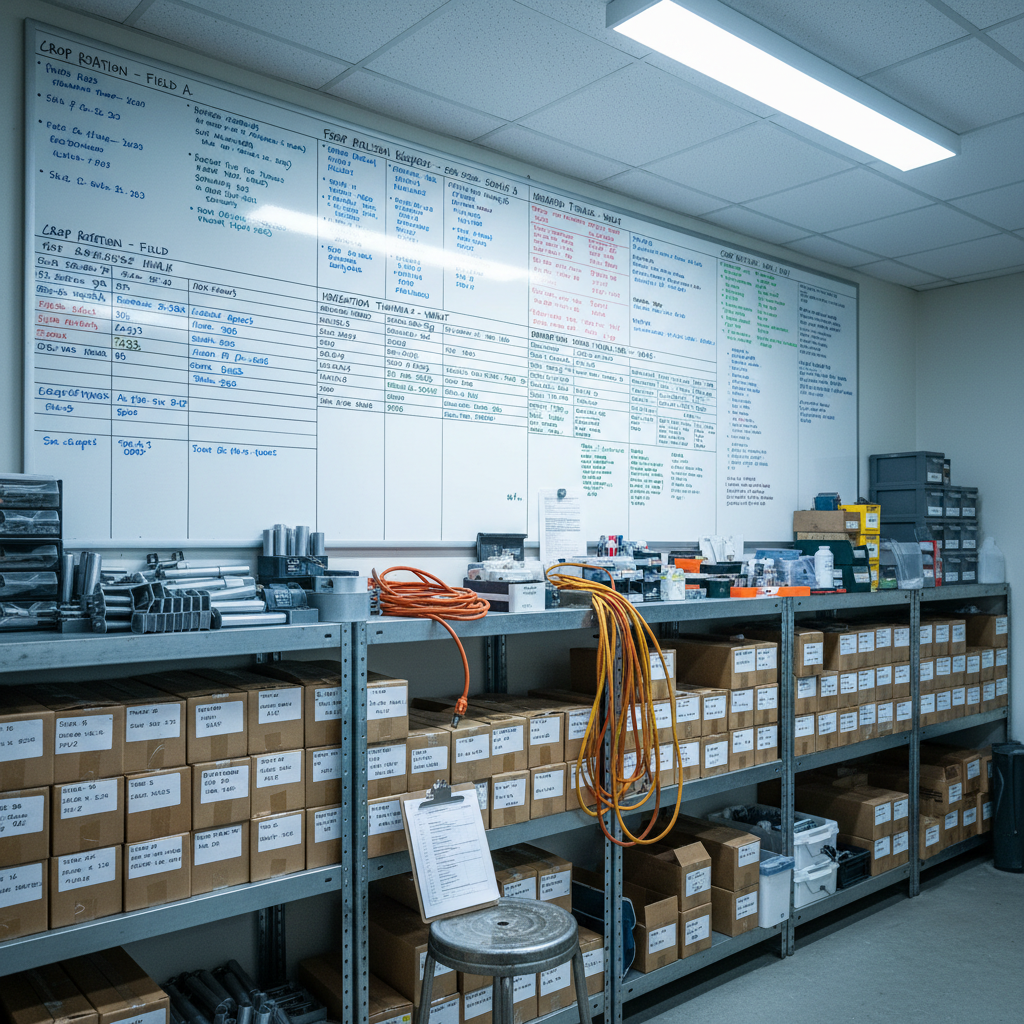
Inside a tidy but crowded barn office, a large whiteboard fills most of the wall, covered in multicolored crop schedules, fertilizer rates, and irrigation timelines written in precise handwriting. Below it, metal shelves overflow with neatly labeled soil sample boxes, moisture sensors, and coiled extension cords, while a single battered clipboard rests on a small metal stool. Overhead fluorescent lights cast a cool, consistent glow, creating crisp highlights on plastic containers and faint reflections on the whiteboard surface. The composition is slightly angled to show depth along the shelving, with sharp focus throughout. The mood is disciplined yet stretched thin, evoking a sense of constant planning with limited hands to execute, captured in clean, professional photographic realism.
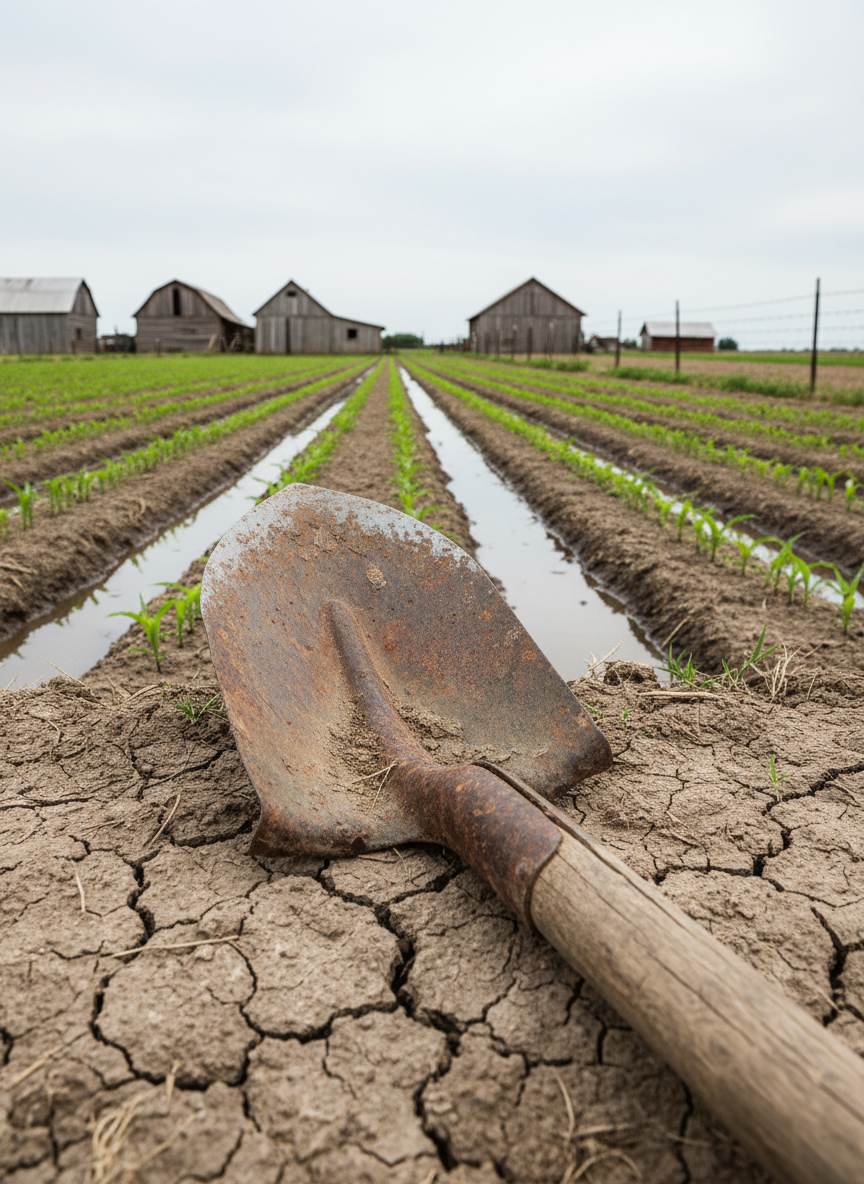
A close-up photographic scene of a heavy, rust-streaked metal shovel lying unused on the edge of a tilled field, its worn wooden handle resting across a cracked, sunbaked patch of earth. In the midground, neat rows of young crops emerge in precise lines, separated by narrow irrigation channels that glint faintly with remaining water. Soft overcast daylight creates diffused, even illumination, gently emphasizing the contrast between tool and soil. The background falls into a subtle blur of distant barns and fence lines, suggesting an organized yet overburdened operation. Shot from a low, slightly angled perspective with shallow depth of field, the mood is professional, reflective, and quietly resilient, emphasizing the theme of labor without enough resources in a realistic photographic style.
An organized wooden farmhouse desk positioned beside a small window overlooking a distant pasture, the glass lightly speckled with dust and soil. On the desk, an open planner filled with neatly written crop rotation notes sits beside a rugged, mud-splattered tablet case displaying a color-coded farm management dashboard. Stacks of labeled seed packets, a coiled measuring tape, and a weather-beaten field notebook complete the scene. Soft morning light filters in from the side, casting gentle highlights on the paper edges and subtle shadows from the pen and tablet. The atmosphere is focused and professional, suggesting careful planning under pressure. Captured at eye level with moderate depth of field and clean, balanced framing, the photographic realism underscores the intersection of agricultural science and everyday management challenges.
Inside a tidy but crowded barn office, a large whiteboard fills most of the wall, covered in multicolored crop schedules, fertilizer rates, and irrigation timelines written in precise handwriting. Below it, metal shelves overflow with neatly labeled soil sample boxes, moisture sensors, and coiled extension cords, while a single battered clipboard rests on a small metal stool. Overhead fluorescent lights cast a cool, consistent glow, creating crisp highlights on plastic containers and faint reflections on the whiteboard surface. The composition is slightly angled to show depth along the shelving, with sharp focus throughout. The mood is disciplined yet stretched thin, evoking a sense of constant planning with limited hands to execute, captured in clean, professional photographic realism.

Reviews

A close-up photographic scene of a heavy, rust-streaked metal shovel lying unused on the edge of a tilled field, its worn wooden handle resting across a cracked, sunbaked patch of earth. In the midground, neat rows of young crops emerge in precise lines, separated by narrow irrigation channels that glint faintly with remaining water. Soft overcast daylight creates diffused, even illumination, gently emphasizing the contrast between tool and soil. The background falls into a subtle blur of distant barns and fence lines, suggesting an organized yet overburdened operation. Shot from a low, slightly angled perspective with shallow depth of field, the mood is professional, reflective, and quietly resilient, emphasizing the theme of labor without enough resources in a realistic photographic style.

Aya Nakamura

“This approach to farming and teaching reshaped how I see hard work paying off.”

An organized wooden farmhouse desk positioned beside a small window overlooking a distant pasture, the glass lightly speckled with dust and soil. On the desk, an open planner filled with neatly written crop rotation notes sits beside a rugged, mud-splattered tablet case displaying a color-coded farm management dashboard. Stacks of labeled seed packets, a coiled measuring tape, and a weather-beaten field notebook complete the scene. Soft morning light filters in from the side, casting gentle highlights on the paper edges and subtle shadows from the pen and tablet. The atmosphere is focused and professional, suggesting careful planning under pressure. Captured at eye level with moderate depth of field and clean, balanced framing, the photographic realism underscores the intersection of agricultural science and everyday management challenges.

Mateo García

“The stories from the family field inspire my own practice every season.”